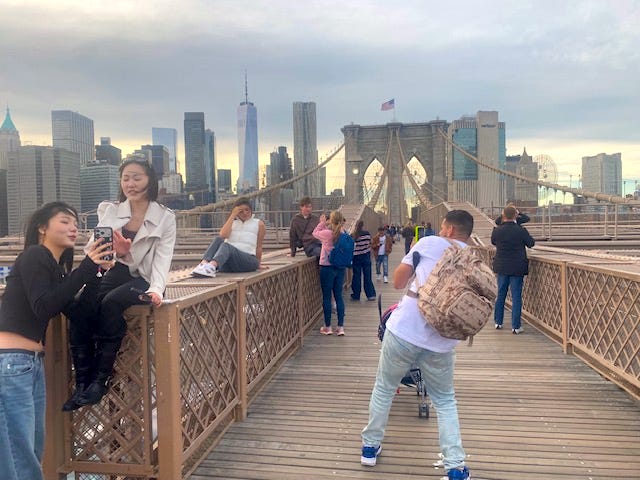
These days, as I have been trying to meet my daily quota of 30,000 steps, I have been commuting on foot from Manhattan back home to Brooklyn every other day. I thus cross the Brooklyn Bridge several times a week, and sometimes I feel like I am the only New Yorker who ever crosses it. The bridge is always populated by tourists, easily identifiable by their I ♥ NY T-shirts, their mixture of wonderment and confusion, and their tendency to walk with their heads lifted while zigzagging from side to side. (We New Yorkers only look down or straight ahead, always moving forward.) Their slowness sometimes drives me crazy. They become temporal icebergs, while the city and I seem to exist in a different dimension of velocity and work-focused efficiency. But especially on days when I am stressed, I have learned to appreciate the sight of people strolling leisurely, genuinely happy and fascinated by the grandeur of Gotham, which we locals are usually incapable of appreciating anymore. Mostly, though, I have been noticing how the bridge is a vast theater of posing. Practically every tourist has to take a picture of themselves or their friends there. This is perhaps the most commonplace ritual imaginable, and yet watching it over and over has made it seem increasingly strange to me. The moment the camera comes out, something happens to the body. People straighten themselves, tilt their heads, arrange their hands, manufacture expressions. Teenagers, young couples, sports teams, businessmen, seniors: everyone seems to possess some private theory of how they should look when converted into an image. There is a sweetness to it, particularly in the nervous smiles, the momentary self-consciousness, the hope that somehow they will come out all right. Watching them made me realize that, after all my years of writing about the social dynamics of the art world and thinking about its various players—artists, curators, critics, collectors, dealers, and so forth—there is one character I have never really considered. It is someone who has been indispensable to the history of art and yet is rarely considered part of the art world at all: the model. So, please hold still while I try to examine this fascinating subject. The model occupies a peculiar place in the history of art. Neither entirely inside nor outside the artwork, the model can be subject, object, collaborator, employee, muse, specimen, erotic projection, anonymous body, or historical witness. Perhaps the model is the only person in the studio whose job consists essentially of being looked at. And posing contains a paradox: the model is performing while often being required to appear not to perform.
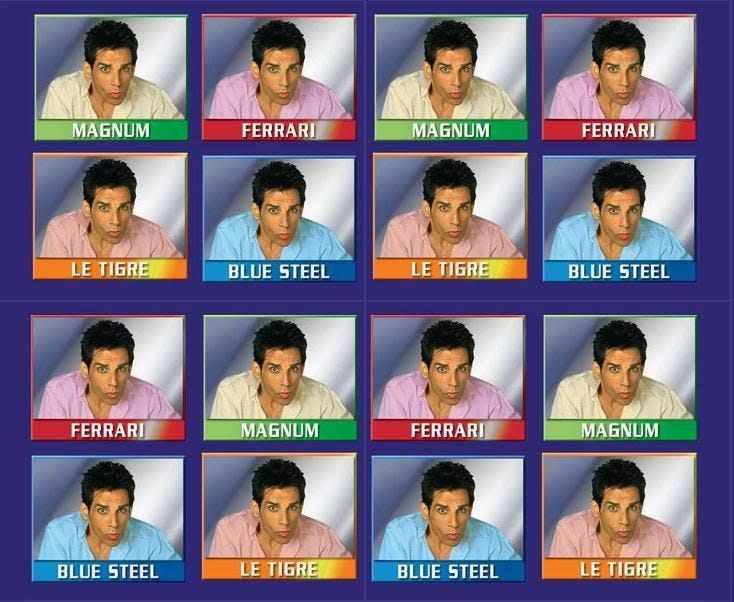
In the era of social media and the permanent documentation of almost everything, we have all been forced to learn something of the model’s art. Some enthusiastically embrace the task of self-documentation, while the rest of us mostly play it by ear whenever a camera is pointed in our direction. This involuntary recruitment into modeling often produces an acute self-consciousness that we then struggle to conceal: we must somehow look as though we are not thinking about how we look. Some people solve the problem by developing a technique—a particular smile, tilt of the head, or expression that becomes their reliable photographic self. Once discovered, it can be deployed indefinitely. At its extreme, this repertoire can become ridiculous, as in the famously indistinguishable catalogue of looks performed by Ben Stiller’s supermodel Derek Zoolander: Blue Steel, Le Tigre, Ferrari, and, ultimately, Magnum. Most of us, of course, never become quite so accomplished. Some people would rather not be photographed at all. 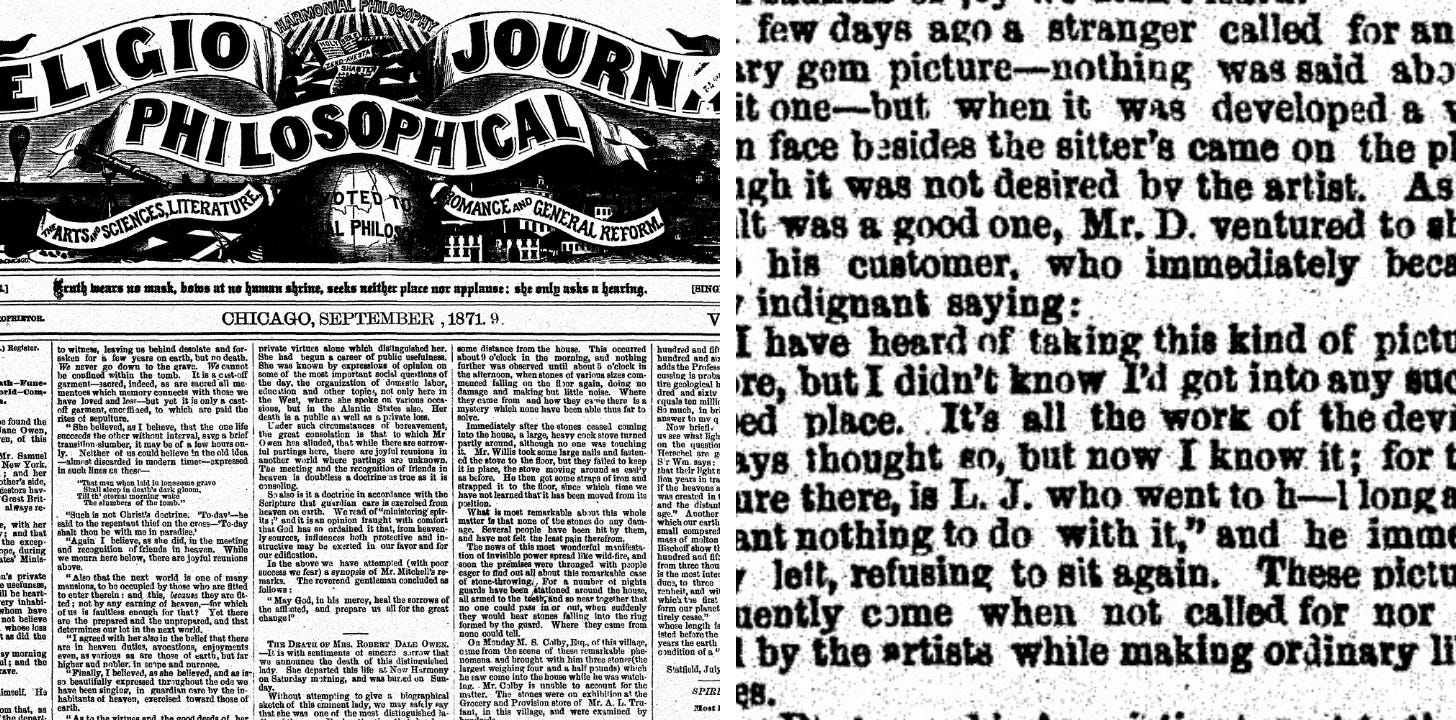
An 1871 issue of the Religio-Philosophical Journal featuring an article on spirit photography. It recounts the story of a sitter who, after discovering a mysterious second face in his portrait, declared it “all the work of the devil” and refused to be photographed again.
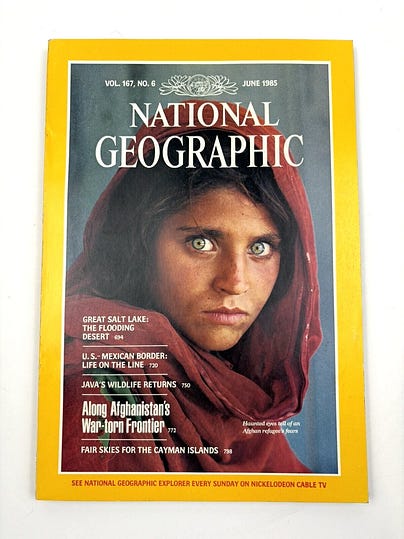
I remember that, growing up in Mexico, we would sometimes visit Lagos de Moreno, Jalisco, where my uncle Carlos Helguera lived in an eighteenth-century house that had once belonged to Elena Soiné, my grandmother’s sister. The house has always been an important historical marker for our family. Tía Elenita kept chickens and hogs there, and employed a woman named María de Jesús, who after 50 years and long after Tía Elenita’s passing was still working in the house during my childhood. She had held my father in her arms when he was a baby in the 1920s. María de Jesús was wonderful: deeply religious, affectionate, and possessed of the particular mixture of solemnity and humor that I associate with the small-town Mexico of my childhood. She called me “Paulo Sesto”—Paolo VI, Pope Paul VI—which I suppose was her way of finding the closest available celebrity to Pablo. But there was one thing María del Jesús absolutely would not tolerate: cameras. She regarded them as the work of the devil and refused to have her photograph taken. I don’t know exactly what theology she attached to photography, or whether she would literally have said that a photograph could steal your soul. I only remember that, for her, allowing a camera to capture her image meant surrendering something she was determined to keep. The idea that photography can steal the soul has a complicated history. It is often presented as a superstition shared by Indigenous or “primitive” peoples, although historians have pointed out that this was partly a colonial cliché: photographers and anthropologists collapsed many different objections to being photographed into the convenient story that their subjects feared losing their souls. Still, there have certainly been cultures and individuals who believed that an image could capture some part of a person’s spirit or vital force. And perhaps others simply understood something photographers were slower to acknowledge: to make an image of someone is, in some sense, to take something from them. And perhaps María de Jesús was not entirely wrong. Consider the case of Sharbat Gula, the Afghan refugee photographed by Steve McCurry in 1984 at the Nasir Bagh refugee camp in Pakistan. The following year, her portrait appeared on the cover of National Geographic and became one of the most recognizable photographs of the twentieth century. Her green eyes and extraordinarily direct gaze came to signify, for millions of Western viewers, not simply an individual girl but Afghanistan itself: war, displacement, beauty, danger, and an exotic world onto which any number of fantasies could be projected. For seventeen years, however, virtually no one who knew the photograph knew her name. She was simply “the Afghan Girl.”
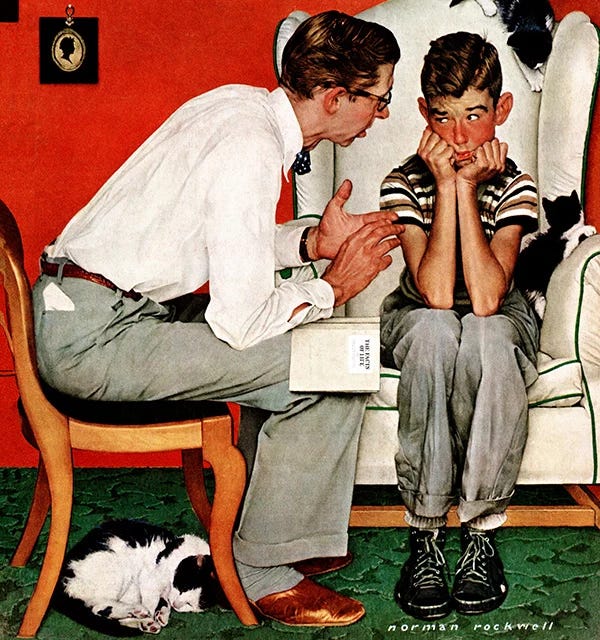
Years later, Gula made clear that she had never welcomed this transformation. In a 2022 interview with La Repubblica, she said that the photograph had created many problems for her and that she wished it had never been taken. She remembered McCurry arriving at the school in the refugee camp and recalled that she did not like photographs. “But there wasn’t much choice,” she added. It is difficult not to return here to the old superstition about photography stealing the soul. Gula’s soul was presumably left intact, but something else was taken from her: control over the meaning of her own face. A frightened refugee girl became an icon, an aesthetic object, a symbol of Afghanistan, and eventually part of the mythology of photography itself. Millions of strangers knew her face while knowing almost nothing about the person to whom it belonged. Perhaps the disturbing thing about the old superstition is not that it was irrational, but that it identified the wrong thing being stolen. The thing about art is that we sometimes become its subjects without knowing it—or without particularly wanting to. I remember Peter Rockwell, son of Norman Rockwell, whom I once invited to lecture at the Guggenheim. His talk was wonderfully titled “Confessions of a Reluctant Model,” and concerned, among other things, the experience of growing up with a father who was constantly recruiting him to pose for his paintings.
Norman Rockwell, it seems, was a demanding employer of models, even when his models happened to be family members—or animals. Peter recalled that his father once needed a cat for a composition and, not having one of his own, borrowed one from a neighbor. The problem was that the cat refused to stay still. Rockwell eventually resorted to giving it some kind of sedative so that he could get the pose he needed. When he returned the then lethargic animal to his neighbor, she looked at it and remarked: “I had no idea being a model was so tiring.” The neighbor’s joke contained more truth than she probably realized. Posing is work. The modeling profession is seldom, if ever, discussed in art as an art form in itself. But there is, in fact, a technique to being looked at. I learned something about this from Dannielle, who worked as a model on the side when she was an art student. Among other jobs, she modeled for a group of amateur photographers in New Paltz, who would dress her in different costumes and, on at least one occasion, had her run naked through a cemetery. The art of posing, Dannielle tells me, lies partly in knowing your own body well enough to find a position that can be sustained (particularly in painting studios, which require long poses). What may look effortless in a painting or drawing can become agonizing after several minutes. A badly chosen pose leaves you contending with numb limbs, cramped muscles, and eventually excruciating pain, all while being expected to remain perfectly still. The skilled model therefore learns a peculiar form of bodily intelligence: how to create the appearance of spontaneity, grace, tension, or abandon while quietly calculating where the weight is falling and how long the body can endure it. This is why dancers and yoga practitioners tend to make good models. There is an odd division of knowledge between artist and model: the artist knows what the pose looks like; the model knows what the pose feels like.
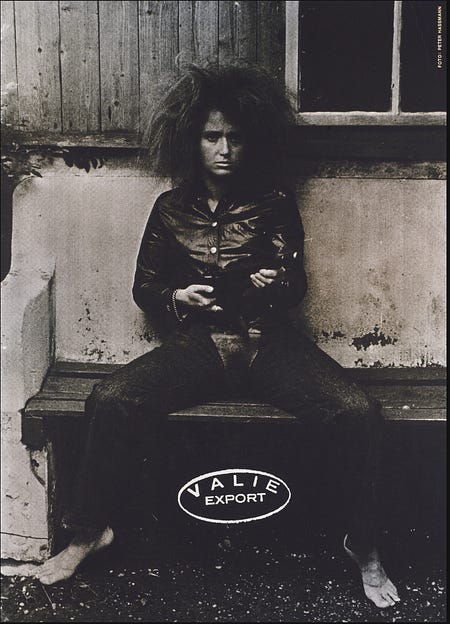
At some point in the second half of the 20th century the models struck back. Much of feminist art of the 1960s and 1970s can be understood, among other things, as a revolt against the traditional arrangement between the person who looks and the person who is looked at. Artists who had inherited an art history filled with women’s bodies posed for the contemplation of others began using their own bodies while refusing the conventional role of the model. In works such as the recently departed Valie Export’s Aktionshose: Genitalpanik, the body is still exposed, but the terms of exposure have radically changed. In the famous photographs associated with the work, Export sits with her legs apart, wearing trousers cut away at the crotch and holding a machine gun. She is simultaneously model and artist, image and image-maker. Most importantly, she does not return our gaze seductively or submissively— instead, she confronts us. This was one of the great reversals performed by feminist art: the objectified model looked back. The apparently passive object of representation announced that she knew she was being looked at, understood the power contained in that transaction, and could manipulate it herself. Half a century later, however, the story has taken a peculiar turn. The camera seems to have struck back. It no longer requires an artist, photographer, or painter to recruit us as models. We carry the apparatus ourselves. We voluntarily photograph our faces, our meals, our vacations, our children, our aging, our workouts, our grief and our happiness, and submit the results to an audience whose gaze we actively solicit. The model may have seized control of the camera, but somewhere along the way the camera also seized control of the model. Perhaps this is the great irony of our contemporary emancipation from the gaze. We gained unprecedented control over our own image at precisely the moment when producing images of ourselves became almost compulsory. Which brings me back to the countless tourists I encounter every other day as I walk across the Brooklyn Bridge. Nobody is forcing them to pose, and they have more control over their self-representation than perhaps any model in history: they are simultaneously model, photographer, art director, editor, and publisher. And yet they seem unable not to make the photograph. On the contrary, an invisible social force demands that the picture be taken, posted on Instagram, and entered into the record as evidence of their presence: I was here. We have become the traveling garden gnome, dutifully carrying ourselves from landmark to landmark to be photographed in front of them. As so often happens with technology, what initially appears to give us greater control can quietly become another expectation we are required to perform. We have liberated ourselves from the photographer only to become our own unpaid models, posing on command for a camera we ourselves are holding. At least Norman Rockwell’s cat got a sedative. You're currently a free subscriber to Beautiful Eccentrics. For the full experience, upgrade your subscription.
|